
The Value of Harmony in the Church & in Music

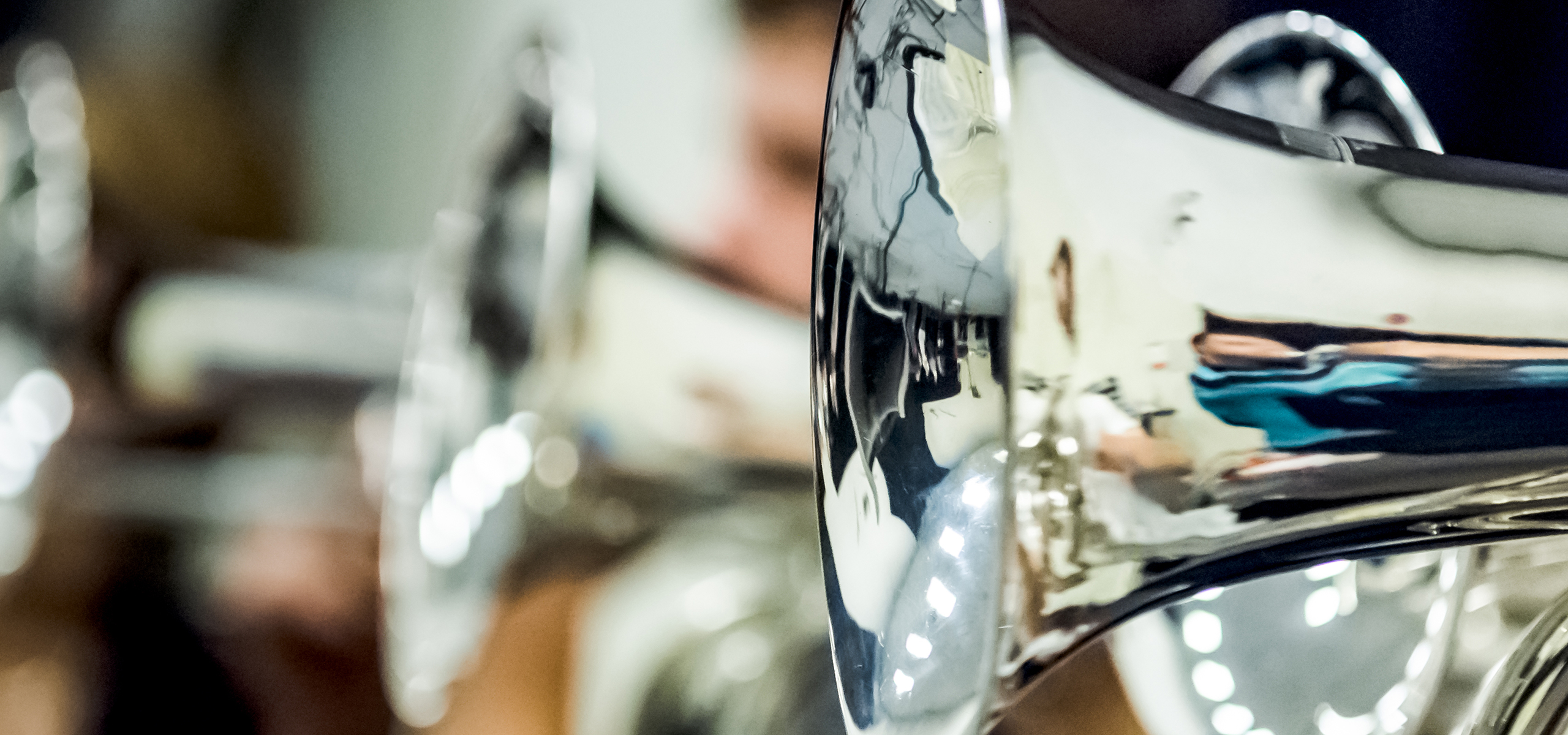
One of my earliest music-related memories is lying on my parents’ orange couch listening to reel-to-reel tapes of Broadway musicals. We didn’t own a large selection of recordings, but we had The Sound of Music, several Gilbert and Sullivan operettas, and The Music Man, my favorite. I loved the jolly songs and the story of the inept little band that magically turned into a huge, marvelous marching band, complete with 76 trombones. It wasn’t the love story that I cared about; it was the band.
My school didn’t have much of a band in the small town where I grew up. Not until raising my own children could I live out—albeit vicariously—my dream of participating in a marching band. All of our kids joined band and, among the three of them, one played French horn and two played the sousaphone. If your children are considering choosing a sousaphone, let me offer this piece of advice: Make sure you have a large house because this oversized instrument takes up a lot of floor space during the off-season.
Katie, our middle child, believes that marching band is pretty much the best thing that ever happened to her. Last year at about this time, she vowed to become next season’s marching band commander—the “drum major” of previous generations—and she accomplished that quite handily. Along with three other commanders, she dons a white uniform, a tall feathered hat, and a whistle to lead the 165-member marching band during their competitive marching season.
Yep, it’s a pretty big deal. Having zero band experience, I can’t fully understand her role. I know, though, that she’ll wave her arms around a lot. And count properly. And blow that whistle stridently enough to wake every dog in the neighborhood. I know, too, that the band members will follow her lead, listen for her orders and, when she says “jump”, they’ll ask “how high?”
Those techniques make a good marching band work. Every student in every section must follow the lead of the director. And Katie isn’t the only director. There are other commanders, yes, but also section leaders and, most important, the teacher. He depends on his commanders and section leaders to control their individual groups because, with a band that large, he needs help.
He can’t do it alone.
And neither can we.
A musical ensemble of any kind aims to present beautiful music to the world. Everyone must work together to accomplish that single goal. The musicians have their music and they know how to read it. But they also need someone telling them when to start, when to stop, when to breathe, and, in the case of a marching band, when to step forward and with which foot. Only when individuals work with each other in unison—in harmony—can a marching band succeed.
The same goes for a huge symphonic orchestra or a small church choir. Or a church, for that matter. Only when a faith family works together can they thrive. As Christians in a church led by fallible Sunday school teachers, deacons, elders, and pastors, it can be difficult to always work in harmony. But when we support each other and work together despite our differences, we show Christ to the world.
When each part does its work, we become the vine and the branches that bear much fruit. We are the supporting ligaments which hold the body of Christ together. Only when we work together can we present beautiful music to the world.
Instead, speaking the truth in love, we will grow to become in every respect the mature body of him who is the head, that is, Christ. From him the whole body, joined and held together by every supporting ligament, grows and builds itself up in love, as each part does its work (Ephesians 4:15–16, NIV).
As we move into wedding season, we can share our faith with young couples just beginning their lives together. We can do that through words—written and spoken—through encouragement and through prayer. Always prayer. And we can reflect on our own marriages, remembering the words of Peter. Above all, love each other deeply, because love covers over a multitude of sins (1 Peter 4:8, NIV).

Gretchen O’Donnell is an island girl living on the prairies of southwestern Minnesota with her husband, two youngest children, and two argumentative cats. And even though she never played in a band, she did suffer through seven years of piano lessons, an investment which never paid off for her parents. Gretchen does freelance writing for her local newspaper and has a weekly faith-based newspaper column, The Disheveled Theologian. She loves telling stories of her ordinary life to help people see the theological truths in their everyday lives.
Related Posts

The Power of a Card

An Unconventional Way to Connect with Unconnected Kids













Comments