
How to Make Each Day Significant


Neil Armstrong and Buzz Aldrin became the first men to walk on the moon on July 20, 1969. They were no less pioneers than those who braved the stormy Atlantic to establish new colonies in the Americas.
When those two, plus Michael Collins, splashed down in the Pacific, they immediately went into quarantine on the aircraft carrier Hornet. “Quarantine” has an uncomfortably familiar sound in this coronavirus era.
President Richard Nixon flew to the Hornet to congratulate the astronauts, speaking to them through a window in their quarantine trailer. After offering congratulations, the president’s expression turned somber. “The eight days of Apollo 11,” he told them, “was the greatest week in the history of the world since the Creation.”
I’m confident the president was sincere. But as remarkable as their achievement, I think of another week in history that surpasses even their mission. It was Passion Week, when Jesus died on the cross for our sins and then rose from the dead on that first Easter Sunday.
All of that started me thinking about what makes a week significant. For that matter, what makes a day significant?
I’m confident God wants us to live as Paul recommended: Be very careful, then, how you live—not as unwise but as wise, making the most of every opportunity, because the days are evil (Ephesians 5:15-16, NIV®).
To make the most of your opportunities:
1. Receive each day as a gift from God.
The psalmist said, This is the day the Lord has made. We will rejoice and be glad in it (Psalm 118:24, NLT). Max Lucado (Every Day Deserves a Chance) suggests it’s relatively easy to believe holidays are days the Lord has made. Wedding days qualify. So do Easter Sundays, vacation days, super-sale Saturdays—these are all days the Lord has made.
But what about the day COVID-19 drives you into isolation? What about surgery days, final exam days, divorce days, tax days, the day you send your first-born off to college? Did God make these days? As Lucado says, God “isn’t on holiday. He still holds the conductor’s baton, sits in the cockpit, and occupies the universe’s only throne. Each day emerges from God’s drawing room. Including this one.”
2. Respect the value of each day.
The psalmist said, Teach us to number our days, that we may gain a heart of wisdom (Psalm 90:12, NIV®). The psalmist obviously believed if we pay attention to each day, realizing we only have so many—a finite number—we can gain wisdom.
Wisdom is more than knowledge. It is knowing how to apply knowledge in a given situation. And to do this in a timely fashion often proves challenging, which is why we need God’s help each day. Theodore Roosevelt said, “Wisdom is nine-tenths a matter of being wise in time.” Most of us, he observed, are “too often wise after the event” (cited by J. Oswald Sanders in Spiritual Leadership). So, seize the day.
3. Rejoice in the opportunities each day provides.
Satisfy us in the morning with your unfailing love, prayed the psalmist, that we may sing for joy and be glad all our days (Psalm 90:14, NIV®). The psalmist saw each morning as an opportunity to sing God’s praises. What will you do with the opportunities this day provides?
One day in 2006, Lincoln Hall was left for dead after developing a form of altitude sickness while descending Mount Everest. His fellow climbers left him at the summit and descended when their oxygen levels diminished. Snow blindness set in. However, the next day, a team attempting to scale the mountain found Hall, lucid although he spent the night at more than 28,000 feet without oxygen, sleeping bag, hat, gloves, food, or water. The climbers abandoned their effort to conquer Everest and stayed with him until a rescue team arrived. Dan Mazur, team leader, said, “The summit is still there and we can go back. Lincoln only has one life” (Wikipedia, Lincoln Hall [climber]).
Your day may not make the news, like a Mount Everest rescue or a walk on the moon. But your days can be significant if you receive each one as a gift from God, respect its value, and rejoice in its opportunities.
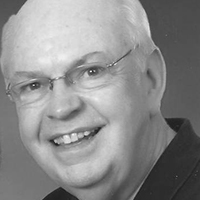
Ron McClung remembers being on vacation in July 1969 and watching on television as Neil Armstrong descended the lunar module ladder and set foot on the moon, stating, “That’s one small step for man; one giant leap for mankind.”
Related Posts

The Power of a Card

Beyond Congratulations—Ways to Support Our Graduates

Doubt and Faith - Part 1

The Positive Power of a Storm

Managing The Storms of Life










Comments